
Valladolid, an industrial hub along the European Atlantic Corridor, is addressing the challenges of both hot summers and cold winters on its path to climate neutrality. Located in Spain’s north, the city faces significant demands for heating and cooling.
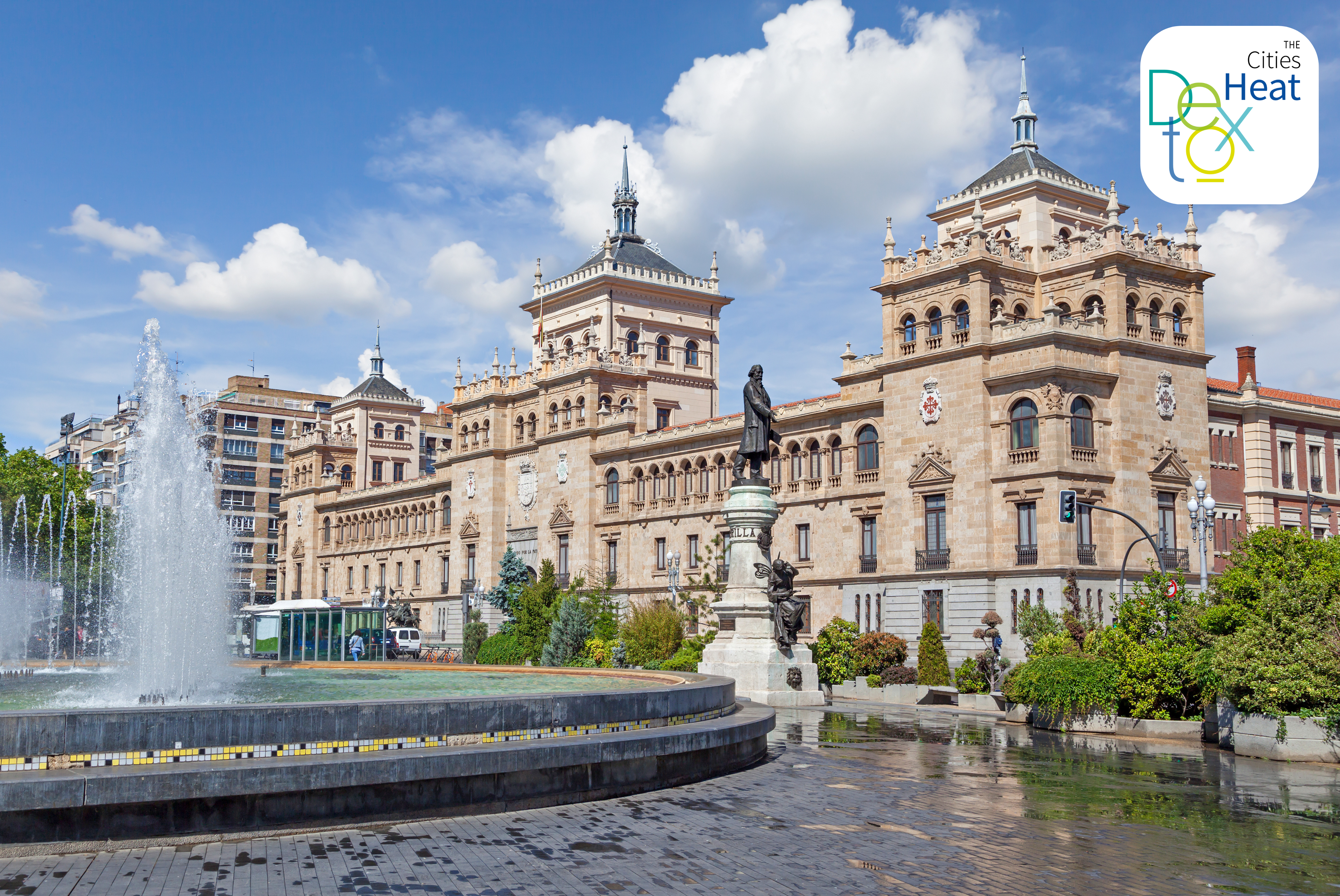
Valladolid is an industrial hub in a strategic position within the European Atlantic Corridor. Despite being located in Southern Europe, its northern position in Spain, combined with its altitude and inland setting, means that warm summers are not the only problem for the city; cold winters are also a concern. This makes both heating and cooling essential sectors to consider in the municipality’s journey towards climate neutrality.
A decisive heat detox
In Valladolid, heating and cooling account for almost one fourth of CO2 emissions. As a part of the EU’s Mission of 112 cities aiming to achieve climate neutrality by 2030, Valladolid has prioritised the detox of this sector. With their heat plan now in motion, the outcomes are already remarkably positive.
From individual heat to a district network
The city has embraced district heating as an effective method to phase out fossil fuels. Their goal of decarbonising Valladolid is set to be achieved thanks to an expanded heat network. The city’s current heat network covers three out of its six districts, with three distinct district heating networks. The city now plans to extend this infrastructure city-wide by 2030 laying down almost 200 km of pipes that are set to serve more than 65.000 homes.
Essential collaboration for a successful expansion
The municipal collaboration with Somacyl, a regional public operator, has been crucial in the expansion of the city’s heat network. Together, they have established a clear collaboration protocol to guide the process of raising pavements and installing the necessary infrastructure.
The plan prioritises connecting municipal buildings to the network first, making them early adopters and setting an example for other public institutions and residential communities. Despite the challenges involved, the deployment in the first three districts has been successful.
As more communities join the network, citizens have responded positively, especially after seeing their heating bills reduced by 30% and benefiting from lower maintenance costs. This has encouraged even more property owners to connect to the heat network.
Detox ingredients tailored to the city
To achieve its decarbonisation goals, Valladolid has tailored its energy sources to suit its local environment. Biomass plays a crucial role in the city’s detox mix, as it not only provides renewable heat but also contributes to cleaner forests in the surrounding region of Castilla y León. By using biomass from nearby forests, the city has fostered a circular economy that supports both energy needs and environmental protection.
Looking ahead, Valladolid is exploring the inclusion of additional renewable heating sources. Plans are in place to hybridise the heating system with other green energy options, including green hydrogen, which is being evaluated as part of the city’s broader sustainability strategy.
Main challenges to detoxify heat:
- Rapid deployement to reaching the whole city
- The need for investment
- Raising awareness amongst citizens, for them to move away from individual heating solutions and connect to the district heating network
Next steps
- Expanding the district heating networks to reach the whole city
- Developing Green Hydrogen
Where is Valladolid in its heat strategy

Valladolid Heat Detox

Heat key figures
- Emissions related to heating: 22%
- Km of DHC planned: 200km
Covenant Figures
- Signatory to the Covenant of Mayors since: 2011
- Emission reduction ambitions:
% GHG emissions reductions by 2030: 100%
% GHG emissions reductions by 2050: 100%
- Mission City