
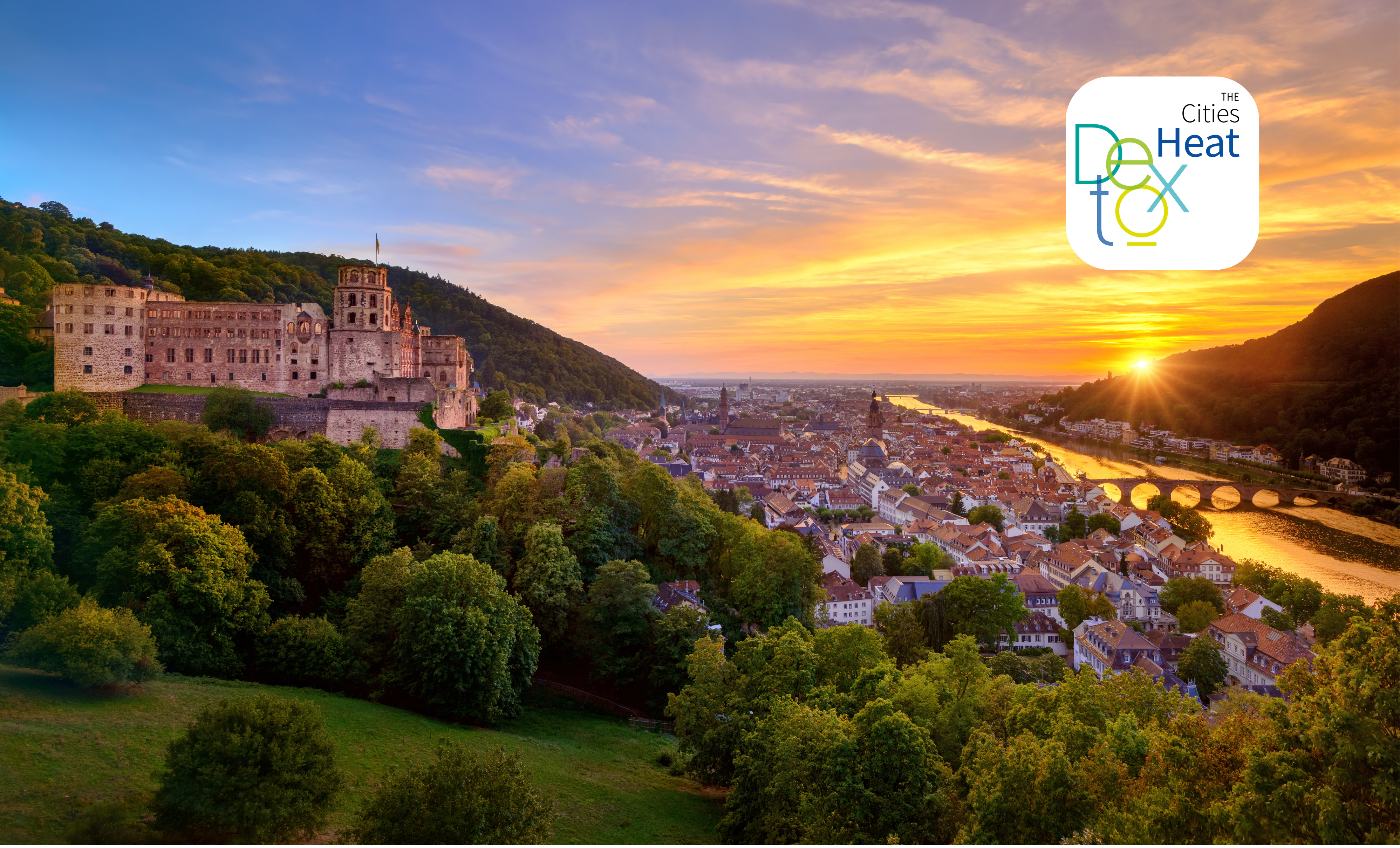
Located in the Southwest of Germany, Heidelberg is best known for its old and prestigious university. But apart from academia, the city is also seriously engaged in the climate transition and, as such, it seeks to decarbonise its heating system as soon as possible. As a scientific hub with a large population of dynamic students, Heidelberg is in an ideal situation to create an innovative heat detox mix, capable of bringing the city closer to its ambitious goal of climate neutrality by 2030.
Heidelberg’s ambitious detox mission
For Heidelberg, serving the citizens with green district heating and cooling is one of the best chances to reduce their CO2 emissions. During wintertime, heating accounts for more than one third of total emissions. Moreover, as summers become increasingly hotter, Heidelberg has begun preparing sustainable cooling solutions to address the rising demand during warmer months.
With already half of the buildings connected to their district heating network, the city has the chance to substitute fossil fuels for cleaner and renewable sources of heating. This is why Heidelberg developed a municipal heat plan to completely abandon coal, oil and natural gas.
Getting down to business
Now with their heat plan finished and approved in 2023, Heidelberg aims to reach a complete decarbonisation of their district heating by 2030, with the incorporation of solar thermal energy and biomass. For the dwellings that cannot connect to the district heating grid - around 30% of the buildings -, the supply will rely mainly on electric heat pumps and solar home systems.
Overcoming challenges
For this ambitious goal to be reached, a lot of investment is necessary, and the financial and technical support of the federal government, as well as from the European Union, are crucial. Despite the short timeframe defined by the city to decarbonise heating and cooling, and even though the process can be disruptive and complex, Heidelberg is confident that, with the right experts and employees, the heat detox will soon be a complete success.
Main challenges to detoxify heat:
- Limited time to take action
- Insufficient funding and staff
- The need for extensive digging out in the city centre
Next steps in their heat detox:
- Large-scale expansion of district heating by 2040
- Transformation of district heating to renewable energies, e.g. construction of a river heat pump and cleaned sewage water heat pump
- Promotion of energy-efficient refurbishment
- Information on decentralised heat pumps
Where the city is in its heat strategy:

Heidelberg's Heat Detox

Key Heat Figures:
- Emissions related to heating: 35%
- Percentage of renewables in heating system: 50% CO2 free (25% from renewable energies)
Covenant Figures
- Signatory to the Covenant of Mayors since: 2008
- Emission reduction ambitions:
- % GHG emissions reductions by 2030: 50%
- % GHG emissions reductions by 2050: 90%
- Mission City
Financing your heat strategy
Financing the heating transition is a major challenge. According to current estimates, the costs for the implementation of the municipal heating planning are 825 million euros for the Heidelberg municipal utilities.
The national subsidies for efficient heating networks play an important role in financing. Private individuals can also invest directly in the heating transition: Stadtwerke was able to raise 6 million euros in equity capital at the beginning of 2024.
Related links
- Website of the municipal heating plan of the city of Heidelberg: https://www.heidelberg.de/waerme
- District heating expansion map of the Heidelberg municipal utilities: https://www.swhd.de/fernwaerme-verfuegbarkeit