
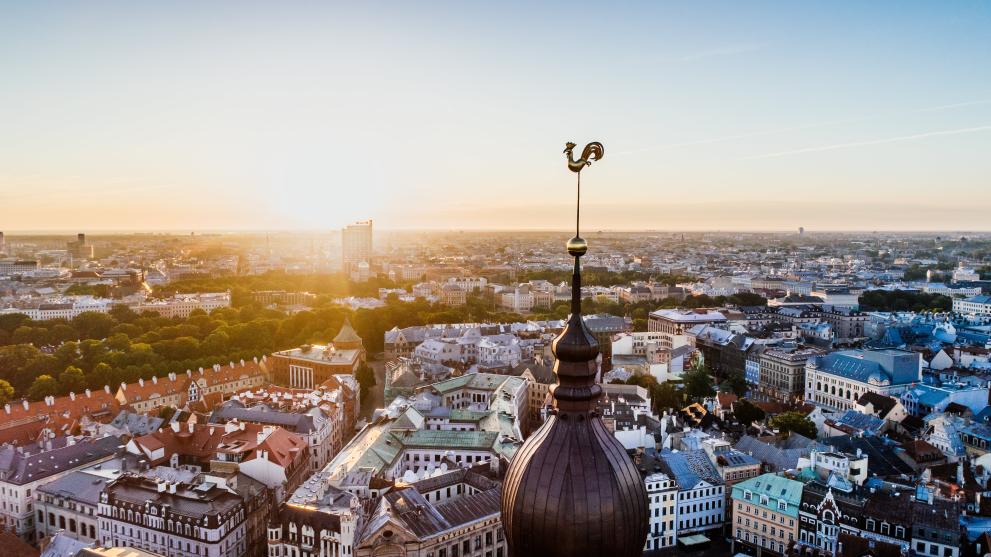
Last winter, in the face of the mounting energy crisis and in response to the European Commission’s call to action, the city of
Riga committed to reducing energy consumption by 15%, in line with its Sustainable Energy and Climate Action Plan. The Latvian capital has also set an ambitious target of slashing its emissions by 70% (compared to 1990 levels) and becoming climate neutral in municipal infrastructure by 2030, as part of the EU Mission for Climate-Neutral Cities by 2030. With the energy crisis and urgent need to save energy, Riga Energy Agency quickly realised that reducing energy consumption would also translate to significant cost reductions, opening a window to reinvest savings into building a more sustainable and climate-neutral future.
From emergency energy savings to long-term sustainable action
One of the main areas of action for saving energy in the city last winter was public lighting. By switching to LED lights, dimming public lighting and removing regulations mandating the illumination of façades, the city reduced lighting-related energy consumption by 16% in the winter of 2022. In addition to implementing energy efficiency measures, the city also focused on saving energy by limiting temperatures and reducing heating hours in public buildings, as well as regulating temperatures in residential buildings connected to the city-owned district heating network. Through these measures, the city saved 15 to 18% of the energy it consumes for heating.
The city estimated that the energy saved by implementing these measures translated to cost reductions of approximately 4 million euros for the previous year. These savings were monitored and calculated using the Energy Management System set up by Riga Energy Agency following the review of the city’s SECAP in 2021.
Seeing these cost reductions as an opportunity, Riga Energy Agency decided to allocate a budget of 4 million euros to support the implementation of SECAP measures.
Managed by Riga Energy Agency and available to any municipal infrastructure or department, this internal fund enables the city to roll out some of the priorities listed in its SECAP developed in 2022. These priorities include installing solar panels, replacing gas boilers and inefficient lighting systems, and implementing greening measures, such as tree planting, to absorb emissions. This budget has the potential to fund actions in around 60 municipal buildings – mainly schools and kindergartens – which can now apply for funding to switch to more efficient lighting systems.
Towards climate neutrality
Riga’s SECAP, developed in 2022, has become the guiding light for its journey to climate neutrality by 2030. Its objectives include the CCC (Climate City Contract) that Riga is currently developing within the framework of the EU’s Cities Mission. Using the re-allocated budget effectively will enable Riga to roll out the important projects laid out in these two key plans. Alongside the city’s resourceful approach, this programme plays an important role in uniting the municipality around a common climate neutrality target. Benefitting from widespread political support from the City Council, the programme has become a top priority. This has brought all hands on deck, fostering collaboration across the city’s departments on the various SECAP actions, which is essential for effective implementation.
Lessons learned and next steps
With the intention of replicating the programme and building on last year’s savings, the city is currently setting up a monitoring system as part of its Energy Management System to report on how much CO2 and energy is being saved, and the equivalent cost reductions. To ensure accountability and add economic value to its efforts, Riga has created a regulation that pegs the value of 1 euro to every tonne of CO2 saved throughout the lifecycle of its projects.
At present, the financial department handles energy bills, while the actual energy consumers are various municipal departments and entities, such as schools. This arrangement disconnects schools from their energy budget, resulting in a lack of incentive to save energy. To address this issue, it is proposed to shift responsibility for the energy budget to Riga Energy Agency, in conjunction with its Energy Management System. This change would also empower the agency to efficiently allocate any savings resulting from energy consumption reductions initiated by schools themselves. By doing so, the agency can motivate schools to save more energy, while enabling them to undertake infrastructure upgrades and other essential projects in the coming years, fostering a more sustainable and forward-looking approach to energy consumption across municipal departments and entities.
Riga, Latvia
Covenant Signatory since 2008
Population: 621,120
Area covered: Local (307.2 km2)
Key figures
- 2021: Energy Management System launched, programme framework drafted
- June 2022 : Programme implementation started
- 4 million euros saved and reinvested in 2023
- 7 solar power installation projects financed by programme
- 60 municipal buildings to be potentially financed by programme
- Energy saved from October–May 2022: 15–18% energy saved from heating (equivalent to 24,891 MWh/year) by reducing indoor temperatures in municipal buildings;
- 16% energy saved from street lighting (equivalent to 4,699 MWh/year)
GHG emissions ambitions:
- % GHG emissions reductions by 2030: 72%
- Net Zero in municipality infrastructure by 2030
Useful links
Financing the project
4 million euros of internal financing: equivalent to the estimated funds saved by the municipality through energy saving
measures in 2022.
Contact
Janis Ikaunieks: kaunieks.janis@riga.lv